How to plan an Indian wedding budget and guest list in a spreadsheet
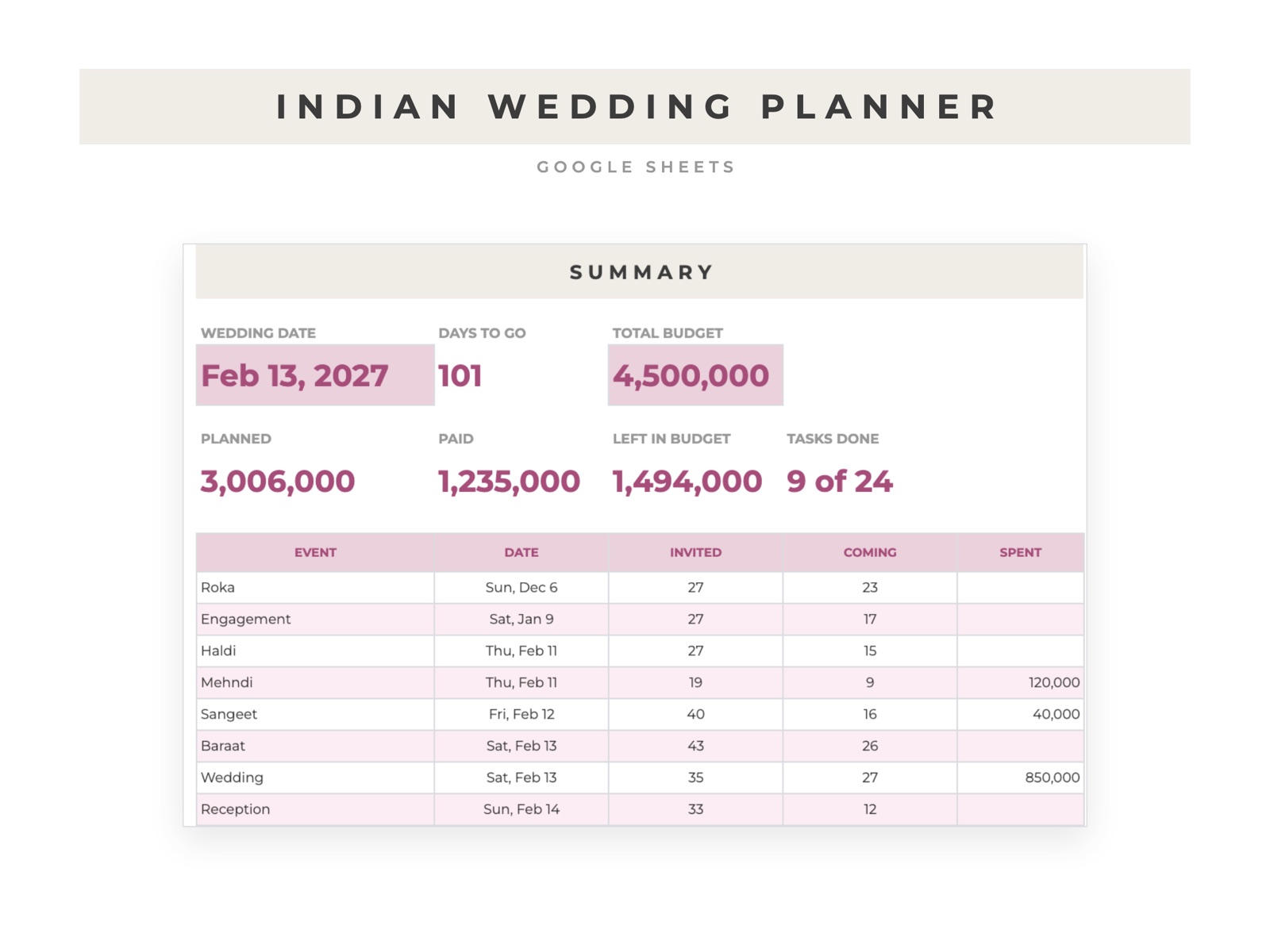
An Indian wedding is several events, each with its own guest list, venue and costs. Planning it in one spreadsheet keeps the headcount for each function and the total budget in the same place.
List the events
Make a tab with one row per function: Roka, engagement, haldi, mehndi, sangeet, baraat, wedding and reception, or whatever your families do. Give each one a date, time, venue and dress code.
Build the guest list
Put one family or guest on each row, with their side, their group and the number of people. Then add one column per event and mark each one Invited, Yes, No or Maybe.
The headcount for an event is the sum of people who said yes. If the people count is in column C and the mehndi answers are in column F:
=SUMIF(F2:F,"Yes",C2:C)
Copy that across for every event, and your caterer numbers update as the replies come in.
Track the budget
One row per cost, with category, event, estimate, paid and due date. Total by category with =SUMIF(A2:A,"Catering",D2:D). Leave the currency sign off the amounts if you're paying in more than one country.
Track the vendors
Keep the quote, the deposit, the balance and when it's due for each vendor. The balance is just the quote minus the deposit, and a due date column with a red rule for anything late saves a lot of phone calls.
Keep a shagun log
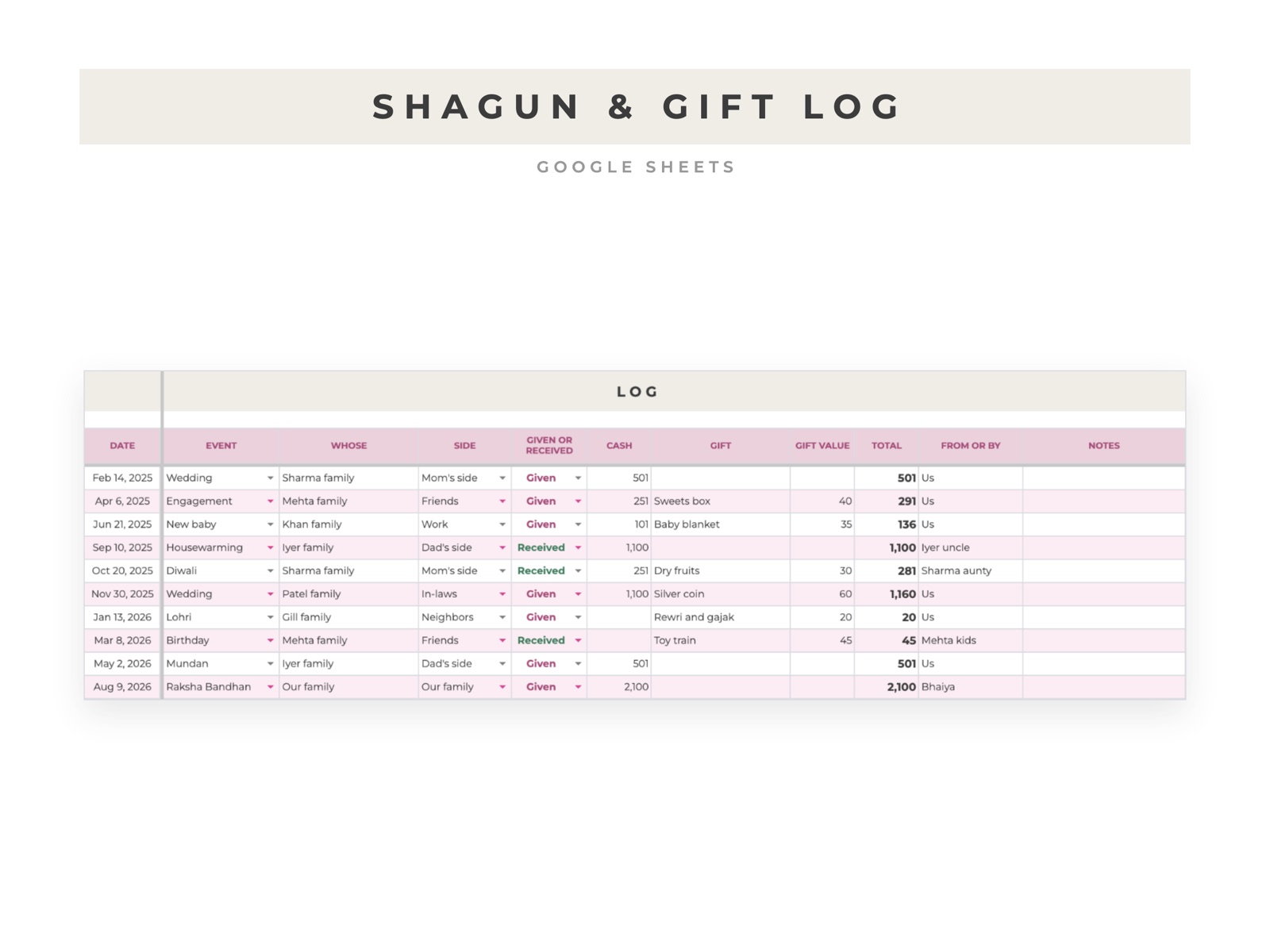
After the wedding, write down who gave what at each event. It's the notebook every desi family keeps, and it's much easier to search later when it's a spreadsheet.
If you'd rather not build it
The Indian Wedding Planner has all of this set up for up to 500 guests, plus a 24-task checklist from 12 months out. The Shagun and Gift Log tracks gifts given and received, with totals for each family.